The Climbing Hydrangea That Will Take Your Garden To New Heights
The Climbing Hydrangea That Will Take Your Garden to New Heights
Climbing hydrangeas are a beautiful and versatile addition to any garden. They can be grown on a trellis, fence, or even a tree, and their delicate white flowers will add a touch of elegance to any setting.
In this blog post, we will discuss everything you need to know about climbing hydrangeas, including:
- Their different varieties
- How to plant and care for them
- How to prune them
- How to protect them from pests and diseases
We will also share some tips on how to use climbing hydrangeas to create stunning and eye-catching displays in your garden.
What is a climbing hydrangea?
A climbing hydrangea is a type of hydrangea that grows as a vine. It is native to Asia, but it is now grown in many parts of the world. Climbing hydrangeas can grow up to 60 feet tall, and they have long, slender stems that can cling to walls, fences, and other structures.
The leaves of climbing hydrangeas are oval-shaped and dark green. In the summer, they produce clusters of white flowers that bloom for several weeks. The flowers are typically 1-2 inches in diameter, and they have a delicate, lacy appearance.
Different varieties of climbing hydrangeas
There are several different varieties of climbing hydrangeas, each with its own unique characteristics. Some of the most popular varieties include:
- Hydrangea anomala petiolaris is the most common variety of climbing hydrangea. It has white flowers and is hardy in USDA zones 4-9.
- Hydrangea seemannii is a evergreen climbing hydrangea that is native to Japan. It has greenish-white flowers and is hardy in USDA zones 7-10.
- Hydrangea serratifolia is a deciduous climbing hydrangea that is native to China. It has white flowers and is hardy in USDA zones 6-9.
How to plant and care for climbing hydrangeas
Climbing hydrangeas are relatively easy to plant and care for. They prefer moist, well-drained soil and partial shade. They should be planted in the spring or fall, and they should be watered regularly, especially during the first year after planting.
To encourage flowering, climbing hydrangeas should be fertilized in the spring with a balanced fertilizer. They should also be pruned in the spring to remove any dead or damaged branches.
How to prune climbing hydrangeas
Climbing hydrangeas should be pruned in the spring, before new growth begins. To prune, simply remove any dead, damaged, or diseased branches. You can also thin out the plant by removing some of the older branches.
How to protect climbing hydrangeas from pests and diseases
Climbing hydrangeas are relatively resistant to pests and diseases. However, they can be susceptible to aphids, scale, and powdery mildew. If you notice any pests or diseases, you can treat them with insecticidal soap or fungicide.
How to use climbing hydrangeas in your garden
Climbing hydrangeas can be used in a variety of ways in your garden. They can be grown on a trellis, fence, or even a tree. They can also be used to cover unsightly walls or structures.
Climbing hydrangeas are also a great choice for creating privacy screens or windbreaks. They can also be used to add height and interest to your garden.
Conclusion
Climbing hydrangeas are a beautiful and versatile addition to any garden. They are relatively easy to plant and care for, and they can be used in a variety of ways. If you are looking for a stunning and eye-catching plant for your garden, then a climbing hydrangea is a great option.
Hydrangea anomala subsp. petiolaris, commonly known as climbing hydrangea, is a beautiful and versatile plant that can add a touch of elegance to any garden. It is a deciduous climber that can grow up to 30 feet tall, and its aerial rootlets allow it to cling to walls, fences, and other structures. In late spring and early summer, it produces large clusters of fragrant white flowers that can completely cover the plant.
If you are interested in learning more about climbing hydrangea, I recommend visiting . This website has a wealth of information on the plant, including its care requirements, propagation methods, and pest and disease control. You can also find a variety of photos and videos of climbing hydrangea in bloom.
FAQ of hydrangea anomala subsp petiolaris
- What is Hydrangea anomala subsp. petiolaris?
Hydrangea anomala subsp. petiolaris, also known as climbing hydrangea, is a deciduous vine that can grow up to 30 feet long. It has large, showy flowers that bloom in the summer. It is native to Asia, and is hardy in USDA zones 3-9.
- How do I care for Hydrangea anomala subsp. petiolaris?
Climbing hydrangea prefers part shade to full shade, and moist, well-drained soil. It is important to water the plant regularly, especially during hot, dry weather. Fertilize the plant in the spring with a balanced fertilizer. In the fall, prune the plant to remove any dead or damaged branches.
- How do I train climbing hydrangea to climb?
Climbing hydrangea can climb on a variety of surfaces, including walls, fences, and trees. To train the plant to climb, you can use garden ties or wire to secure the vines to the surface. You can also help the plant by providing it with a trellis or other structure to climb on.
- What are some common problems with climbing hydrangea?
Some common problems with climbing hydrangea include leaf spot, powdery mildew, and aphids. Leaf spot can be treated with a fungicide, powdery mildew can be treated with a fungicide or insecticidal soap, and aphids can be treated with insecticidal soap or neem oil.
- Is climbing hydrangea poisonous?
Yes, climbing hydrangea is poisonous to dogs, cats, and horses. If your pet ingests any part of the plant, it is important to contact your veterinarian immediately.
Image of hydrangea anomala subsp petiolaris
- A white hydrangea anomala subsp petiolaris climbing up a tree, with lush green leaves.
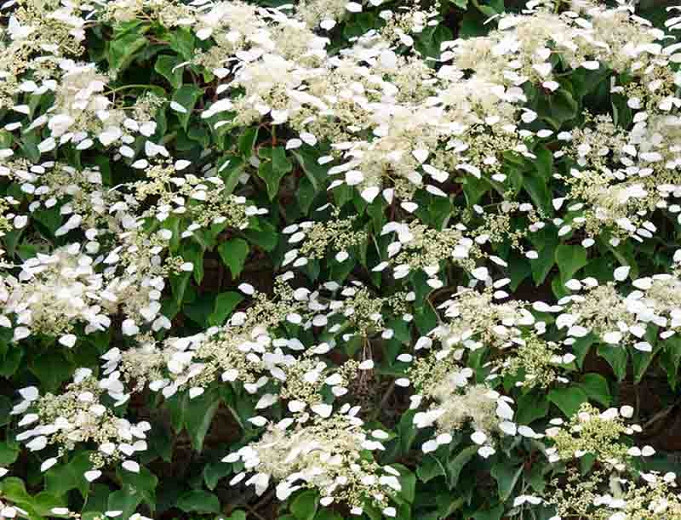
- A close-up of the white flowers of a hydrangea anomala subsp petiolaris, with their delicate petals and yellow stamens.
- A hydrangea anomala subsp petiolaris in full bloom, with its white flowers cascading down a wall.
- A hydrangea anomala subsp petiolaris in the fall, with its leaves turning yellow and orange.

- A hydrangea anomala subsp petiolaris in the winter, with its bare branches and exfoliating bark.


Post a Comment for "The Climbing Hydrangea That Will Take Your Garden To New Heights"